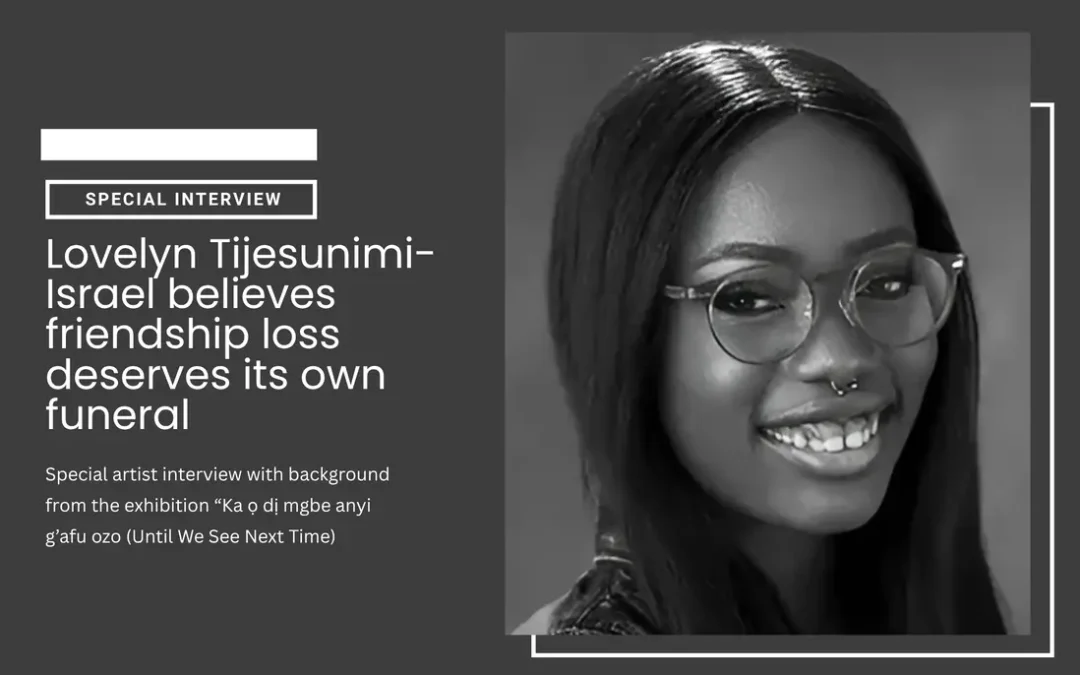
Grief is often associated with death, but for visual artist Lovelyn Tijesunimi-Israel, there’s another form of grief that could be just as devastating: the loss of a friendship. Here, Izehi Amadasu sits with Lovelyn Tijesunimi-Israel to discuss why friendship loss deserves its own mourning and ritual and why it was particularly important to highlight this form of grief in her art.
Izehi: You had your debut exhibition at CCA Lagos’ 16th anniversary in 2023, and now you’re returning to the same space for Ka ọ dị mgbe anyi g’afu ozo. How does it feel to come back—not as the artist you were then, but as the artist you’ve become?
Lovelyn: Coming back to CCA Lagos for Ka ọ dị mgbe anyi g’afu ozo feels like a true full-circle moment. Making this work forced me to face emotions I’d been avoiding for a long time. It was a raw process, but it made me a more grounded artist.
The gallery is the same as it was in 2023, but I’ve changed. Back then, I was mostly experimenting with form and boundaries. Now, my work is much more intentional—it’s about creating honest, emotional pieces that make people pause and think.
Izehi: We usually associate grief with death, but your project explores what it means to grieve someone who is still alive. What made you want to give friendship loss the same attention we often give other forms of grief?
Lovelyn: My answer to this is very simple: it’s the only kind of loss that had a significant emotional effect on me. And I think it’s partially because of rejection sensitivity disorder associated with ADHD. It’s an active form of rejection, so it’s a loss that feels very real to me. The friends “chose” to reject me, so to speak.
Izehi: You describe friendship loss as a kind of grief that rarely gets a funeral, a ritual, or even permission to be mourned. What do you think we lose when we don’t have those ways of acknowledging the end of a friendship?
Lovelyn: One thing I’d say, although it may sound cliche, is closure. Leaving the feelings of abandonment, guilt, anger, fear, doubt, to mention a few, pent up has a way of getting to you in ways you won’t expect. You lose a part of yourself, and it seeps into other areas of your life and festers.
Izehi: The Takotsubo, or Japanese octopus trap, became an important image for this project because it is easy to enter but difficult to escape. What was it about this object that made you feel it could express something you were struggling to put into words?
Lovelyn: I think it’s the multifacetedness of the Japanese octopus trap. I came across it when I was trying to express the pain and abandonment I felt after consecutive losses of friendship. I was looking into broken heart syndrome and found that it was referred to as takotsubo after the octopus trap, and it made sense because what I experienced felt like I was in a trap. All alone with all those emotions.
“[Friendship loss] is an active form of rejection, so it’s a loss that feels very real to me”
Izehi: Is your work asking viewers to empathize, remember, confront, or simply witness?
Lovelyn: It is an invitation to do all the above because I am certain we have all experienced loss of friendship and relationships that hurt a little more than death (sounds exaggerated but true, at least for me).
Izehi: Your work began with a painful experience, but the process of making art can sometimes lead us to unexpected places. Did anything surprising, funny, or even joyful emerge while you were making this project?
Lovelyn: Yes, something interesting happened: I discovered a new emotion I had not experienced before, numbness, and it led to the creation of a particular piece. I think it was a result of looking at all the instances of loss together. I went through other emotions and landed at numbness. But now I feel like I have a release from the hurt. I can think about them without feeling angry or feeling any “negative” emotion towards them. I put negative in quotes because I think emotions are pointers, not inherently good or bad.
Izehi: The title of this exhibition is Ka ọ dị mgbe anyi g’afu ozo (Until We See Next Time). What does “Until we see next time” mean to you—not just as the title of an exhibition, but as a way of thinking about grief, memory, and hope?
Lovelyn: To me, it means a hope of someday reconnecting with these friends, and if I don’t, I am fine with that. Their decisions don’t control my life or aspects of it anymore. It is also a chance to look back on the memories I have with them.
Artists responses have been edited for clarity and concision
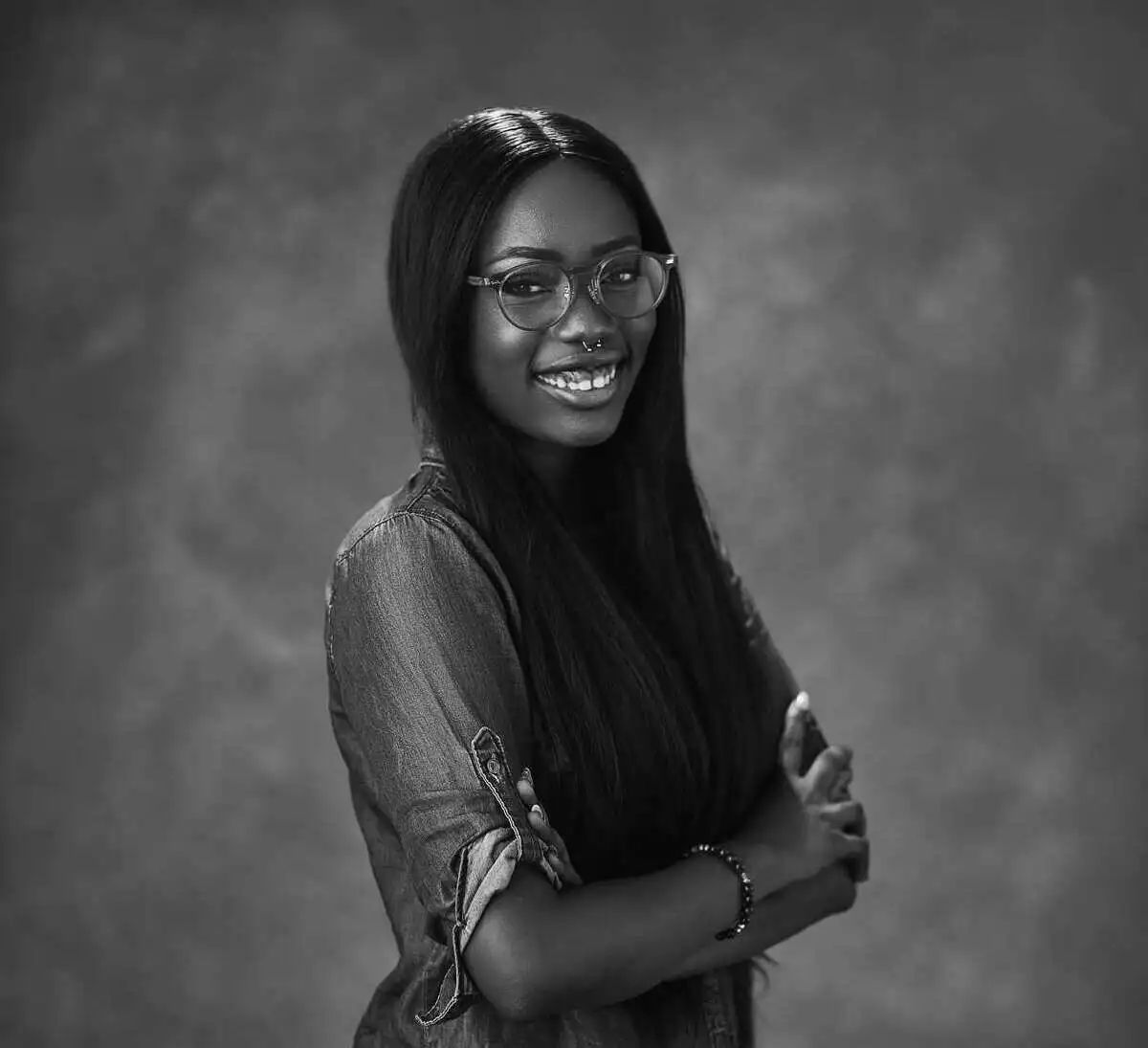
Lovelyn Tijesunimi-Israel is a Nigerian visual artist who transitioned from software development to a full-time art practice. Inspired by her own journey of healing, she creates deeply personal works that explore trauma, memory, and vulnerability, offering space for reflection and emotional connection. Working primarily with ink on paper, Lovelyn draws influence from Korean Dansaekhwa and the Japanese philosophy of Kintsugi. Through delicate line work and minimalist compositions, her practice transforms personal experiences into universal stories of resilience, empathy, and healing.
Izehi Amadasu is a writer and multidisciplinary artist based in Lagos, Nigeria. Her work is centered on exploring how identities such as sexuality, gender, race, and ethnicity interweave into the human experience. Her work has been published in national and international publications, including The Republic, Face2Face Africa, Isele and Frivolous Comma.